Crazy Time: Wheel Layout and Bonus Features
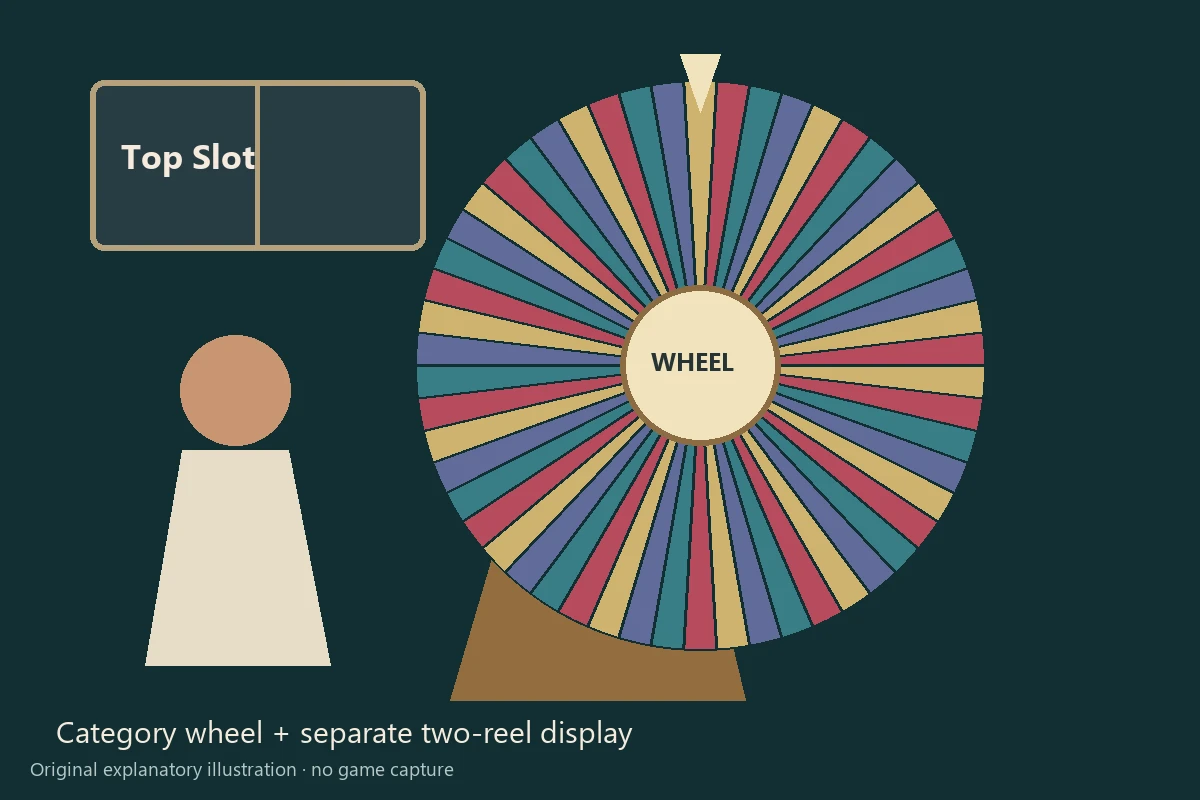
Crazy Time combines a presenter-led money wheel, the Top Slot and four named bonus games. Its central reading task is to identify which event is happening: a main-wheel result, a multiplier assignment or one of the separate bonus sequences. Evolution's original July 2020 announcement establishes the format and names Cash Hunt, Coin Flip, Pachinko and Crazy Time; its product page describes their different objects and interactions. 21
Locate the wheel result before reading the multiplier
The main wheel and the Top Slot convey different information. The wheel contains the number categories 1, 2, 5 and 10 alongside bonus categories; the Top Slot assigns a multiplier to a category. A reader should therefore keep the selected category, wheel outcome and any applicable multiplier in separate mental columns. A large animated multiplier alone does not identify the category on which the wheel stopped. 1
Consider an invented captioning exercise with a still frame showing a number category and a separate multiplier display. One caption should identify the wheel category, and another should identify the multiplier's attachment. Joining both into a single phrase without stating the relationship makes the image harder to understand. The base result can therefore be read as a pair: the category reached by the pointer and the applicable Top Slot assignment. Neither part should silently replace the other.
The studio presenter supplies a human point of reference, but the presenter is not a substitute for the category label. Colour, camera angle and spoken enthusiasm can draw attention to different parts of the scene. When explaining a captured round, the useful sequence is the visible outcome first and the applicable feature second. This is a description of the interface's information hierarchy, not a method for selecting an outcome.
Coin Flip resolves a two-sided object
Coin Flip uses a red-and-blue coin whose upward-facing side determines the applicable multiplier. The product description places a multiplier on each side before the flip. This makes the side identity and the final orientation essential parts of an explanation; a multiplier displayed before the object settles is not yet the same thing as the resolved side. 1
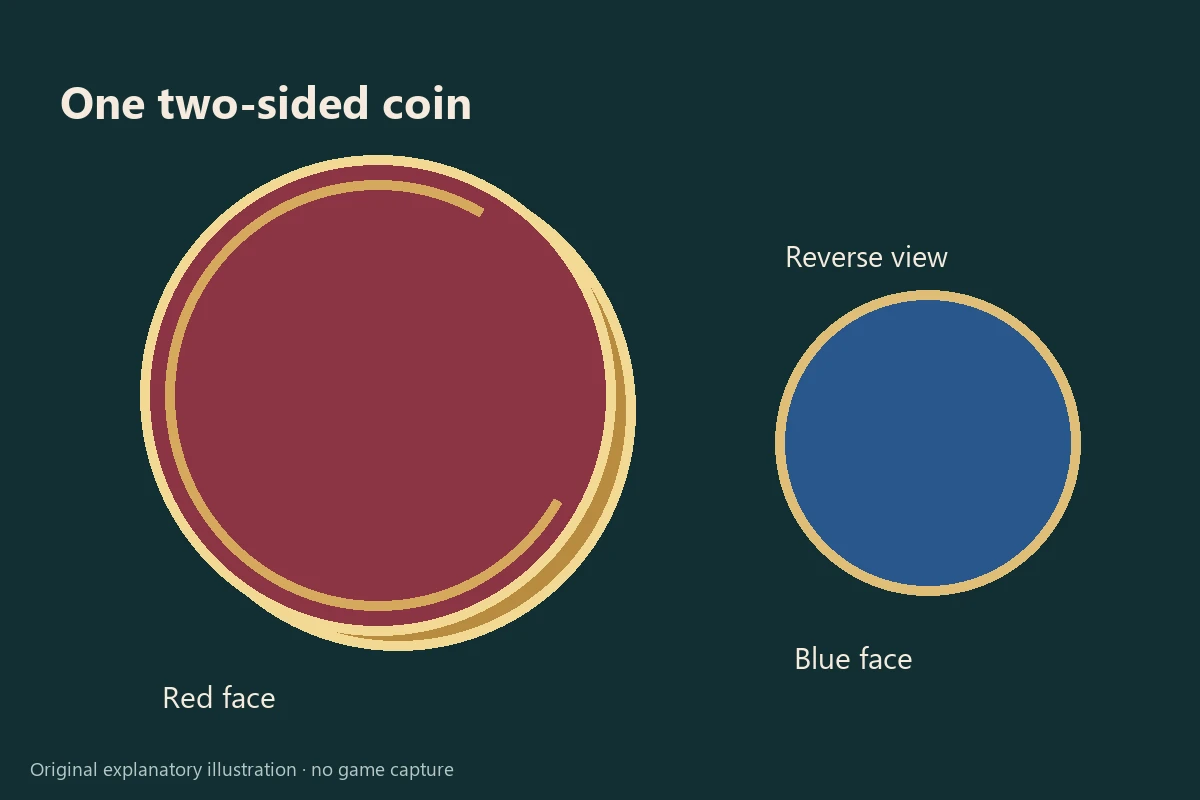
The red and blue surfaces belong to the same coin, even when the camera emphasises only one face. Before resolution, a value belongs to a coloured side; after resolution, the upward face identifies which side applies. A spectator who notices only the larger of the two displayed values has skipped the decisive orientation. The final face, its colour and its attached multiplier should be considered together. This is an information relationship, not an invitation to favour the larger-looking display.
A written description can distinguish preparation from resolution in ordinary language: values are assigned, the coin flips, and one side is identified. Those stages should not be collapsed into a claim that a colour is preferable. Nothing in the two-sided illustration establishes the distribution of the assigned values or an advantage for a reader who follows one colour repeatedly. The documented object explains the presentation, not a forecast.
A puck and a peg wall identify Pachinko
Pachinko is the bonus with a puck descending through pegs toward the result area. Evolution describes multiplier positions and a Double outcome that changes the displayed values before another drop. A puck's route, its landing position and any resulting change to the board are therefore separate details. 1
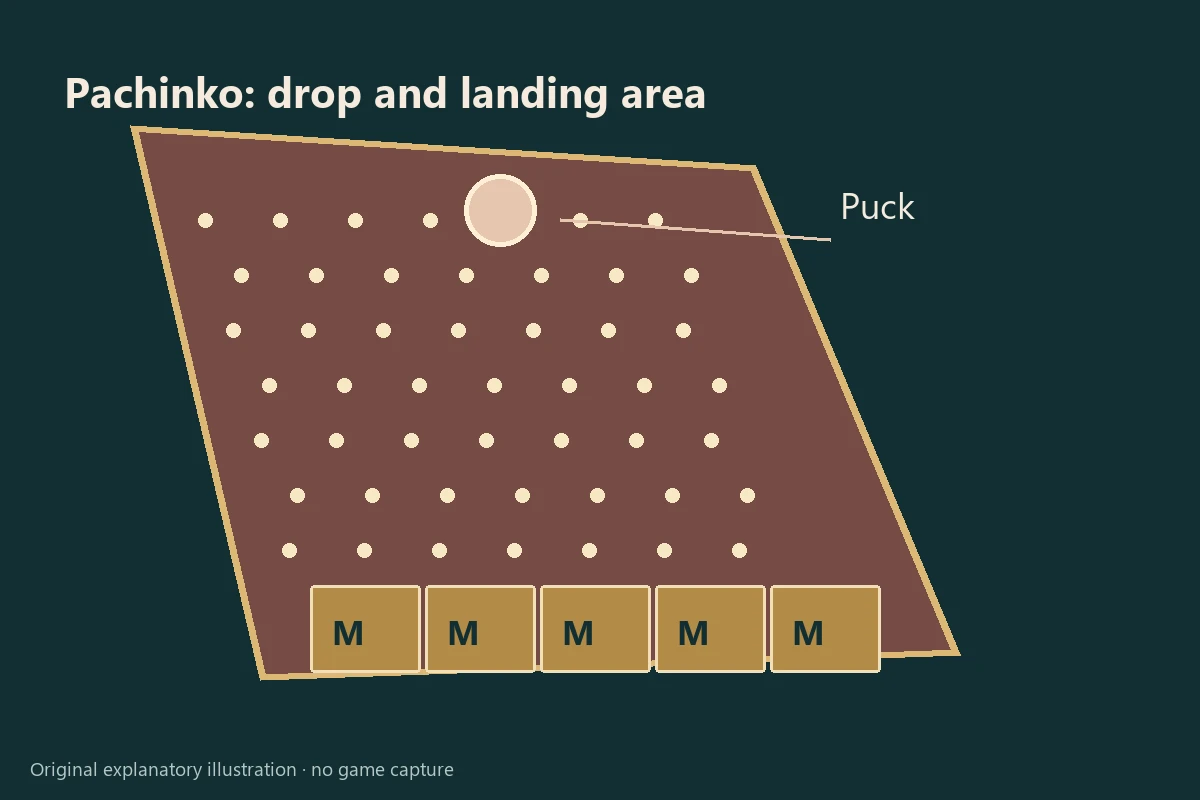
The peg wall occupies the middle of the action, but the landing area supplies the result category. Several rebounds can occur before the puck settles, so an intermediate position should not be described as the completed outcome. The same distinction applies when a replay freezes the puck beside a peg: that frame can show where the object was, but the result still depends on the later landing. Rebounds are movement within a round rather than separate resolved rounds.
If a programme explanation mentions a repeated drop, it should also say why the sequence continued. The product page supplies a named Double condition; a bouncing puck by itself does not explain continuation. Conversely, a completed landing needs its own result label rather than a caption based on the most visually prominent part of the route. Keeping event and consequence distinct is especially helpful when a replay cuts between the presenter and the board.
Cash Hunt puts the selection on a gallery screen
Cash Hunt uses a screen of hidden multipliers under symbols and a timed target selection. The official description identifies a gallery of 108 positions, followed by a shuffle and a reveal through a cannon-style presentation. Different participants can select different targets, so a shared studio scene should not be described as one necessarily shared personal result. 1
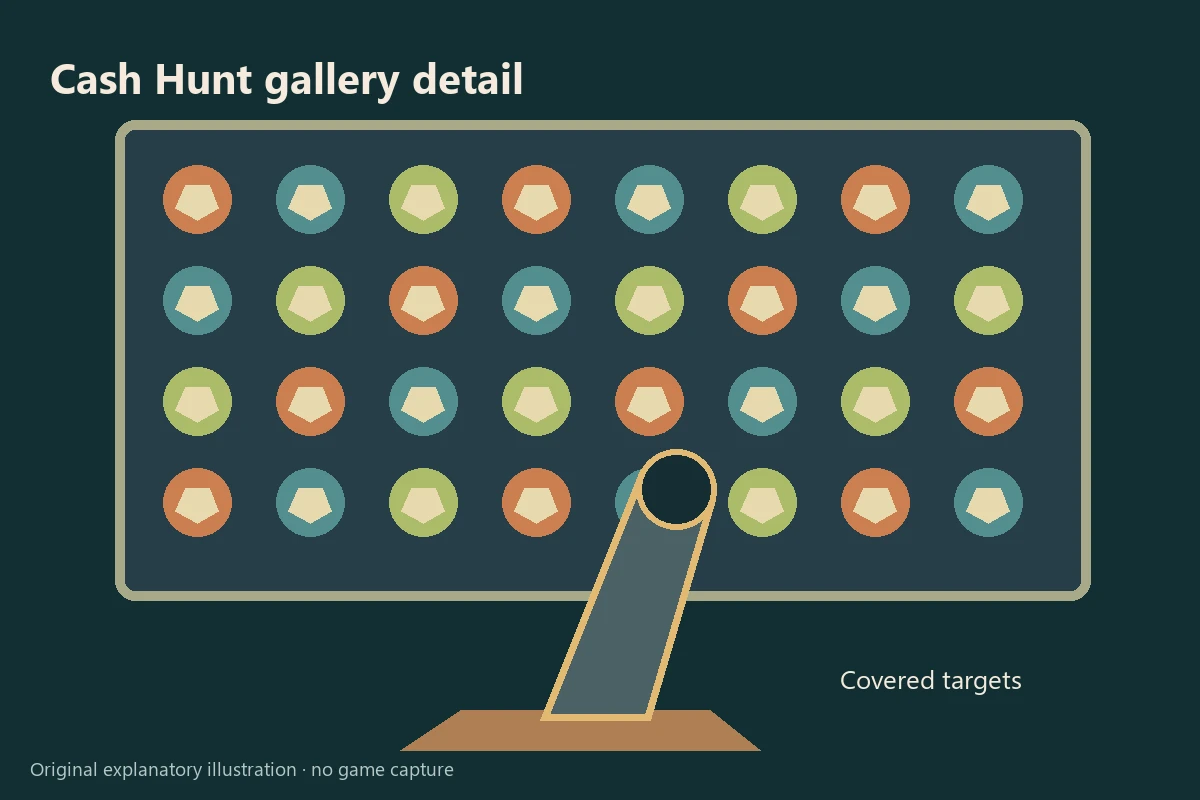
The target field hides information deliberately. A covered position supplies a selectable location, while the revealed multiplier supplies its value. Timing also matters because the selection period ends before the cannon-style reveal. A picture of the gallery before the reveal can establish its arrangement and cover symbols, but cannot supply the values still concealed beneath them. The size of a symbol or its position in a crop does not establish the size of its hidden multiplier.
There is also a difference between the symbol covering a position and the multiplier that is revealed there. A fruit, object or other cover picture is an identifier within the presentation; its appearance alone does not supply a value. A complete explanation distinguishes selection, concealment and reveal, then connects the revealed value to that target. It does not describe a chosen symbol as lucky or suggest that a previously revealed position carries information into a later round.
The namesake bonus changes the scale of the wheel
The Crazy Time bonus moves into a virtual setting with a large wheel and coloured flappers. Evolution's product page identifies blue, green and yellow choices, with the result read from the selected flapper's position when the wheel stops. This is distinct from the base wheel's category selection and from the two-sided Coin Flip object. 1
A cropped view that contains a wheel is therefore insufficient to identify the whole programme phase. The surrounding setting, category labels and flapper arrangement provide the necessary context. Calling every wheel view the main game would erase the difference between arriving at a bonus and resolving that bonus. The name Crazy Time itself can refer either to the entire title or to this particular feature, so good explanations specify which meaning is intended.
Across the programme, the four bonus names are useful navigational labels because each points to a different object or interaction. A coin resolves by orientation; a gallery requires a target; a puck uses a landing area; the virtual wheel uses a flapper. These distinctions let a reader follow an edited clip without importing rules from another feature. The original launch announcement supports the four-feature identity, while the product page supplies the object-level descriptions. 21
Reading notes
What does the Top Slot add?
It assigns a multiplier to a category separately from the wheel’s stopping result. Reading that relationship requires the category label as well as the multiplier display.
Are all four bonuses the same type of interaction?
No. Evolution describes a two-sided coin, a target gallery, a puck-and-peg mechanism and a virtual wheel with coloured flappers.
Can a viewer see a bonus without participating in it?
Evolution distinguishes observing a bonus from participating through its corresponding selection. Visibility of the programme is not evidence about a viewer’s eligibility or personal result.
Does this guide supply a payout table?
No. It explains the documented objects and phases; it does not reconstruct an unpublished table, estimate return or supply a betting strategy.