Mega Ball: Programme Format and Official Rules

Mega Ball presents a live ball draw alongside automatically marked cards and a later Mega Ball feature. Evolution's product explanation describes twenty main-draw balls from a machine containing fifty-one, followed by one or two bonus draws. The important distinction is between matching a number, completing a line and satisfying the separate condition for a Mega Ball multiplier. 12

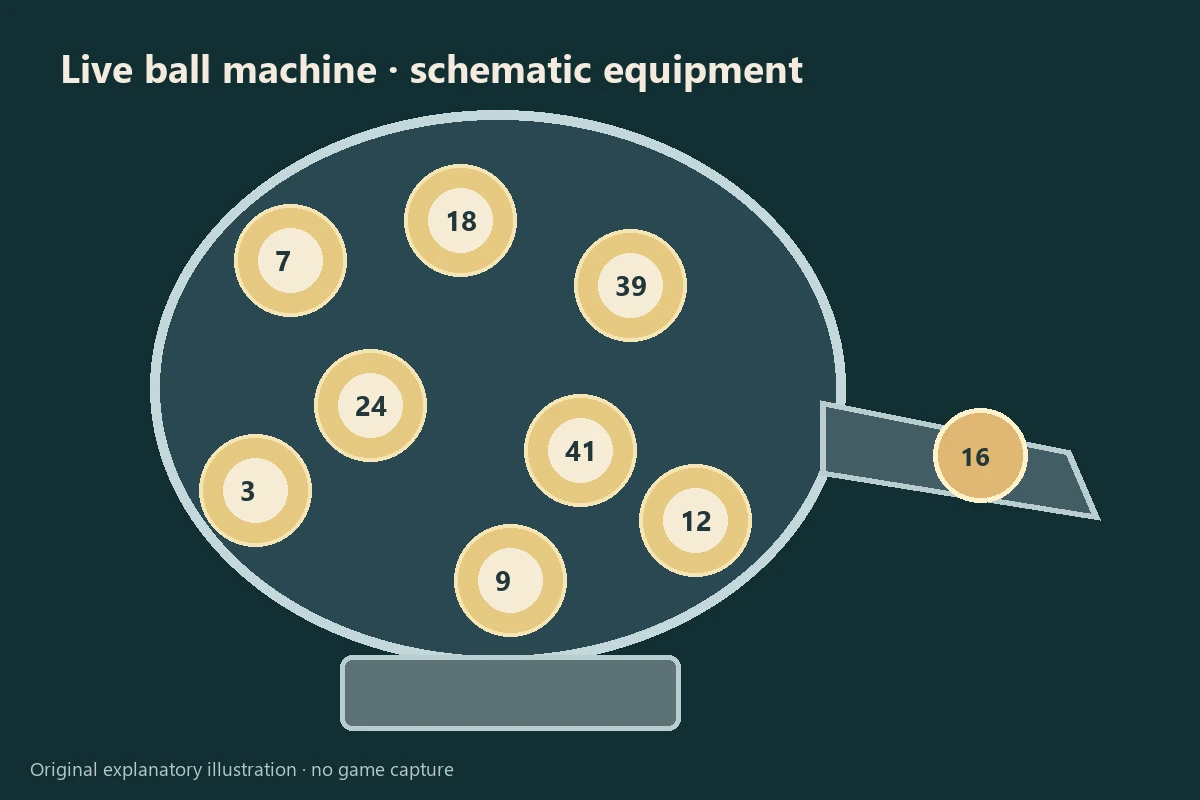
A transparent mixing globe contains sample numbered balls beside an output chute and a separate ball.
The machine supplies a drawn number, while the limited artistic sample does not claim to show all 51 balls or their order.

The machine supplies numbers, while the card supplies context

The physical ball machine and the card display perform different jobs. Evolution's April 2020 launch announcement identifies a custom machine holding 51 balls; the product page describes 20 being drawn in the main sequence, with matching numbers marked automatically on the cards. A ball's visible number therefore needs to be read against a particular card rather than treated as a result on its own. 21

A useful object-level explanation begins with the container, the extracted ball and the card position carrying the same number. These are three parts of one matching relationship. A camera close-up of a ball can establish a number shown in the scene, but it cannot by itself show that a specific card completed a line. That conclusion requires the surrounding card state as well.

The output chute isolates the newly drawn ball from those still inside the container. That separation is useful because the latest number and the remaining pool describe different stages of the draw. A card can acquire a mark when the latest number matches a position, but the arrangement of undrawn balls in a studio view does not identify what will emerge next. Watching the equipment and reading a completed card are complementary tasks with different evidence.
A mark and a completed line are different states

An individual match is part of a card state, while a completed line is a separate condition. The official description says cards update as the balls are drawn and that the interface updates the result associated with completed lines. It also describes sorting cards so that those closer to a line completion are brought into view. 1

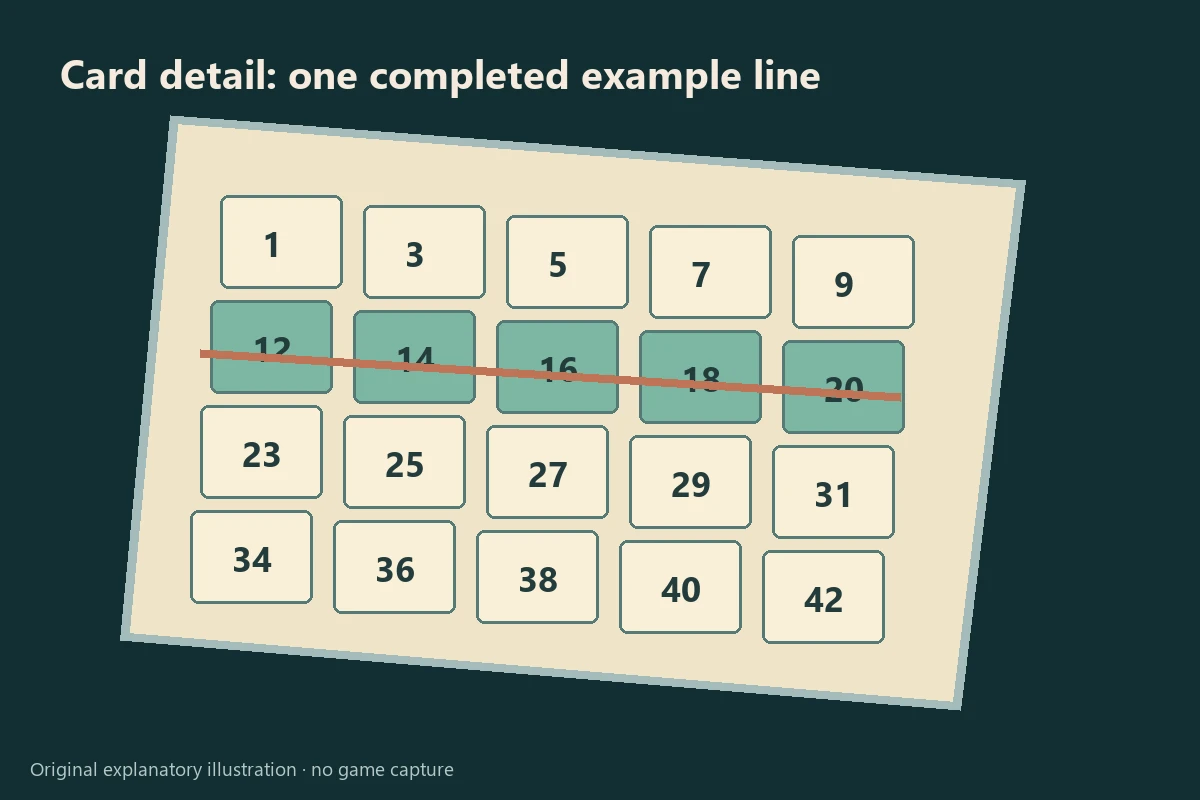
An angled cropped number card contains a highlighted horizontal line and several unmarked number cells.
The filled line distinguishes a completed example from isolated marks; the crop is not a specification of official card dimensions.

This makes the order of cards on screen an interface feature rather than a change to the numbers already present on them. A card moving toward the top is not evidence that its original layout was rewritten. The sorting helps a viewer locate relevant information among several cards, but the line itself must still be identified through the marked positions.

A single completed line can sit among cells that are still unmarked. Those unmarked positions do not cancel the line already completed, but they may matter to a different potential line. This is why a card's overall appearance cannot be reduced to the number of coloured cells visible in a crop. The relevant arrangement has to be identified before describing a line condition. The official card definition remains necessary for the full set of eligible patterns.

For an explanatory exercise, imagine three marks lying in unrelated parts of a card and compare them with marks completing the illustrated line. Both scenes contain matched numbers, yet they communicate different states. The example does not calculate a reward; it simply prevents the word match from silently doing the work of the more specific phrase completed line.

The bonus multiplier is generated before its ball is interpreted

The product page places multiplier generation before the Mega Ball is drawn. It describes a studio display generating that multiplier, followed by a number coming from the ball machine. Those two observations need to remain separate until the drawn number is compared with the card. 1

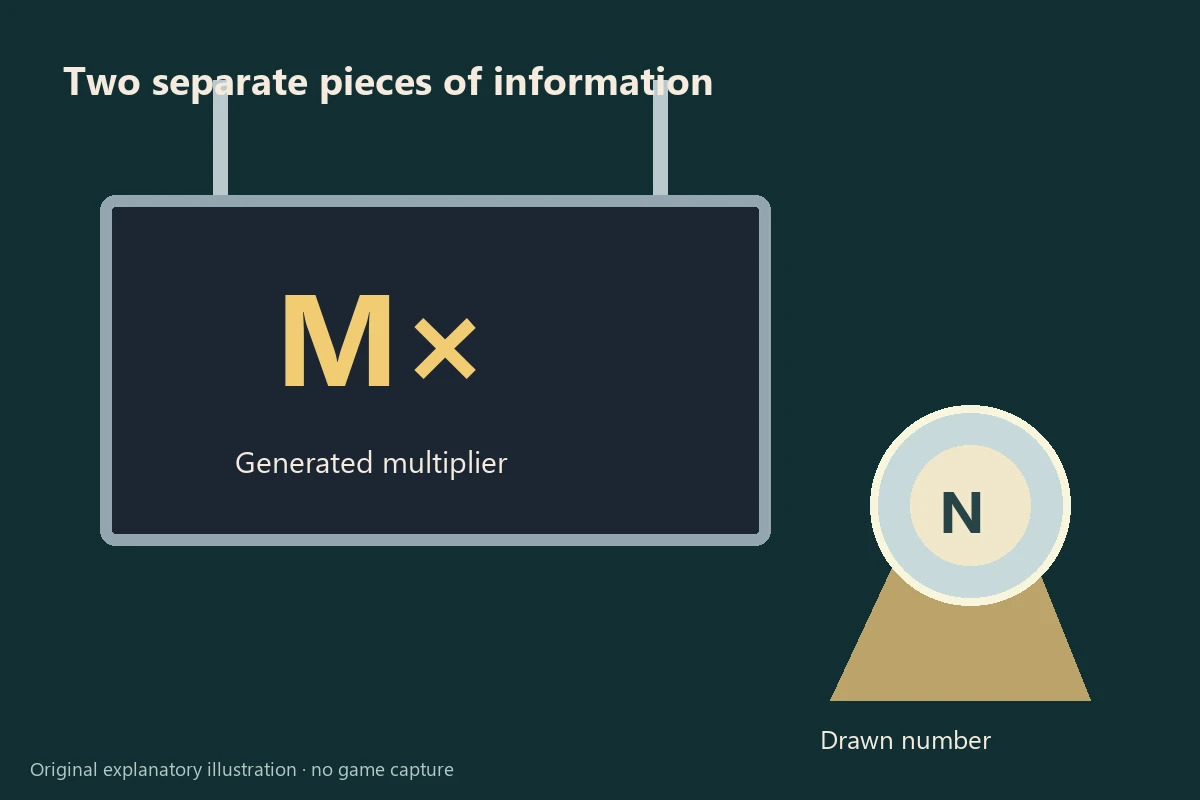
An overhead studio monitor displays symbolic M-times beside a separate cradle holding a ball marked N.
The two physical objects separate multiplier generation from the drawn number without fabricating numeric results.

A large multiplier animation is therefore not a complete explanation of the feature. The reader also needs the relevant number and whether that number completes a line on the card being discussed. An editor who captions only the colourful studio display leaves out the condition that connects the display to a particular card's outcome.

The studio display can announce the multiplier while the next ball's relationship to a card remains unresolved. At that moment, the missing information is not the colour of the display but the number to be drawn and its effect on the relevant line. Once the ball is identified, the card state supplies that remaining context. A sequence that cuts directly from the display to a celebration can hide this intermediate comparison from an edited clip.

The original launch announcement also describes random multipliers attached to the special ball feature. It provides historical context for why the title combines a physical draw with a separate multiplier presentation. The article does not convert that description into an estimate of return, a frequency table or a claim about a player's likely outcome. 2

The Mega Ball must complete a line for the multiplier condition

The official explanation makes line completion the key link between the special number and its multiplier effect. If the Mega Ball number does not complete a line, the page says it is treated as an ordinary ball without applying the multiplier in that way. Merely seeing the special ball in the programme is therefore different from satisfying the condition on an individual card. 1

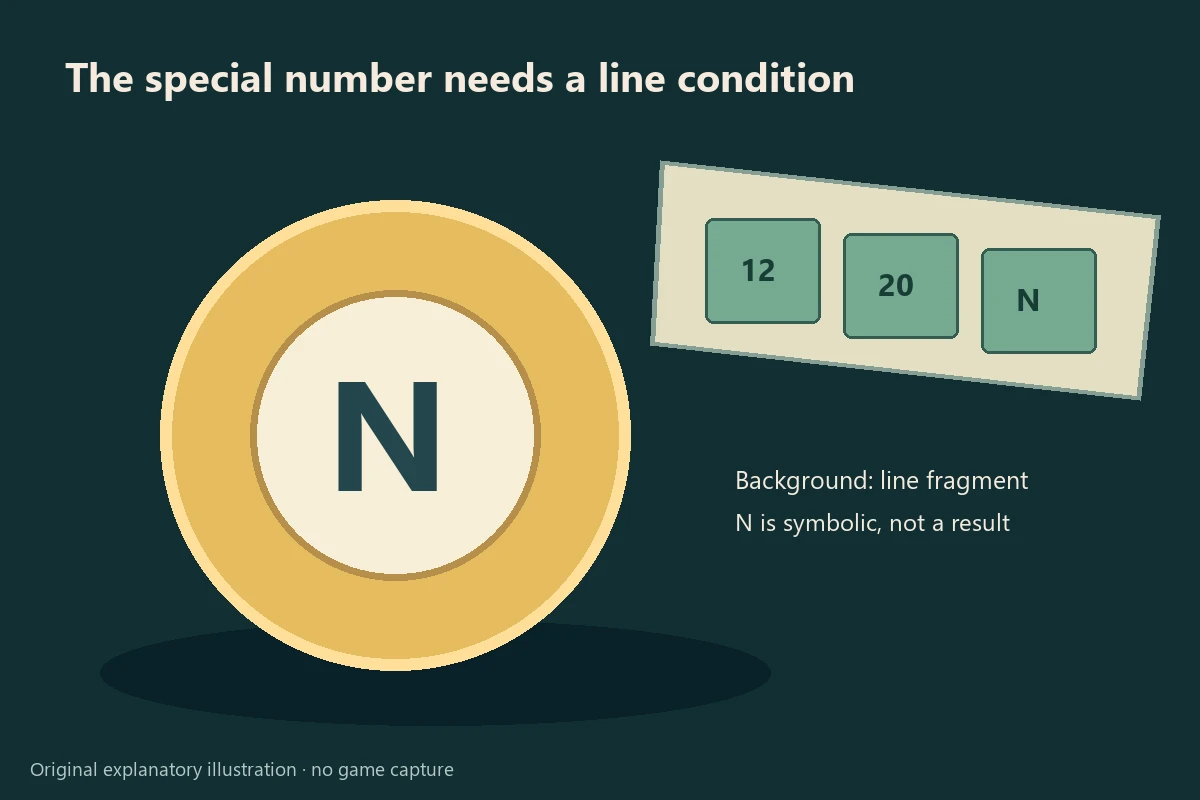
A large gold result ball marked N fills the foreground, with a cropped line fragment carrying N visible behind it.
The special number is the main object; the partial background line explains why that number needs card context. N is symbolic and the three visible cells are not a complete official line rule.

Suppose an invented card fragment has all but one position of a particular line marked. A matching special number can fill that missing position; a number elsewhere on the same card may instead create another isolated mark. These two cases involve the same named feature but different line conditions. The example intentionally assigns no prize because the purpose is to distinguish the condition, not to reconstruct a financial settlement without the applicable table.

This distinction also clarifies why two people watching the same studio feed should not be described as having identical personal results. The feed can supply the same drawn number, while the relevant card layouts and completed lines provide the individual context. The article explains that relationship without recommending the number of cards to obtain or suggesting that screen coverage creates a financial safeguard.

Two bonus balls do not mean multiplying every visible label together

Where two Mega Balls occur, the product page describes a highest-multiplier condition for a card with more than one Mega Ball among its winning lines. That specific instruction should be read before attempting any arithmetic with several on-screen multiplier labels. The presence of two values is not permission to assume that both multiply each other. 1

For a paper-only reading exercise, place two symbolic fields beside a card reference and ask which published operation applies. Addition, multiplication and selecting the higher value produce different results, so the operation cannot be guessed from typography. Keeping the values symbolic lets the explanation focus on the rule relationship rather than supplying a fabricated payout.

An accurate programme summary can therefore describe the main draw, line state, bonus number and applicable multiplier condition in order. This preserves enough information to understand the feature while avoiding a copied financial example. It also makes a screenshot easier to assess: a single frame may establish one stage but omit the context required for another.

Read the completed display without rewriting the draw

The product description says the cards are sorted again after the bonus, with the result presentation reflecting the completed round. A final display is a summary view, not evidence that the earlier draw contained a different set of numbers. Understanding which stage a frame represents avoids treating every visual reordering as a new draw. 1

A sensible explanation names the card, the line and the relevant bonus condition before using a result label. Where a crop hides that context, the caption should stay narrower rather than invent the missing event. This is particularly useful on a phone, where a zoomed card can be readable while the studio display is outside the crop. The same programme can appear through different views without those views individually documenting every step.

Quick clarifications

How many balls does the documented main sequence draw?

The two official sources describe twenty main-draw balls from a machine containing fifty-one, before the special Mega Ball feature.

Does every matching Mega Ball number apply a multiplier?

The published condition ties that effect to completing a line. A special number that does not complete a line is described as an ordinary ball for this purpose.

What happens if two special multipliers affect a card?

Evolution describes a highest-multiplier condition where more than one Mega Ball occurs among a card’s winning lines. It does not invite arbitrary multiplication of displayed values.

Why does this article omit a card-purchase maximum?

The retrieved product page gives inconsistent maxima in its introduction and purchase section. We have preserved the discrepancy and omitted the number instead of choosing one.